
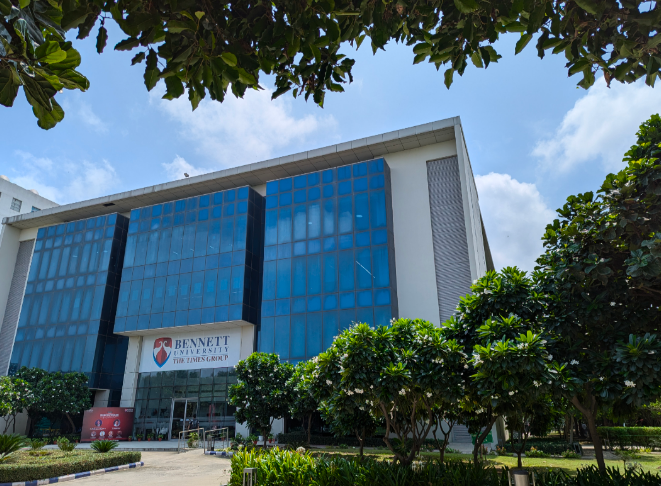
Bennett University was established with an objective of developing a modern higher-education institution combining academic learning, professional skills, research and industry exposure.
The university’s association with The Times Group is an important part of its institutional identity. At the same time, prospective students should assess the university on its current academic programmes, faculty, infrastructure, placement data and recognition rather than relying solely on its parent group’s brand.
The Greater Noida location places the university within the broader Delhi-NCR education and technology ecosystem.
For students searching for Bennett University Delhi, it is useful to understand that the university is not physically situated in Delhi. Its campus is in Greater Noida, Uttar Pradesh, and is therefore part of the wider Delhi-NCR region.
The campus is designed as a residential university environment with academic blocks, laboratories, classrooms, sports facilities, hostels, student activity areas and other infrastructure.
The university’s annual-report information describes a 68-acre campus with 111 classrooms and lecture rooms and 121 teaching/research laboratories. It also states that laboratories include facilities developed with industry leaders such as NVIDIA, Dell and IBM.
Table of Contents
About
| Particular | Details |
|---|---|
| University | Bennett University |
| Campus | Greater Noida |
| Official address | Plot Nos. 8–11, TechZone II, Greater Noida, Uttar Pradesh – 201310 |
| Location | Greater Noida, Delhi-NCR |
| University type | Private University |
| Major academic areas | Engineering, AI, Management, Law, Design, Media, Applied Sciences, Liberal Arts |
| Campus size | 68 acres |
| Students | 14,000+ according to current university admissions information |
| Programmes | 50+ UG, PG and doctoral programmes |
| International collaborations | 120+ reported by the university |
| Companies for placements | 1,200+ reported by the university |
| Corporate collaborations | 20+ |
| Hostel capacity | 10,000 |
| Sports facilities | 16+ |
| Student clubs and societies | 40+ |
| Startups launched | 70+ |
| Startup funding reported | ₹125 crore+ |
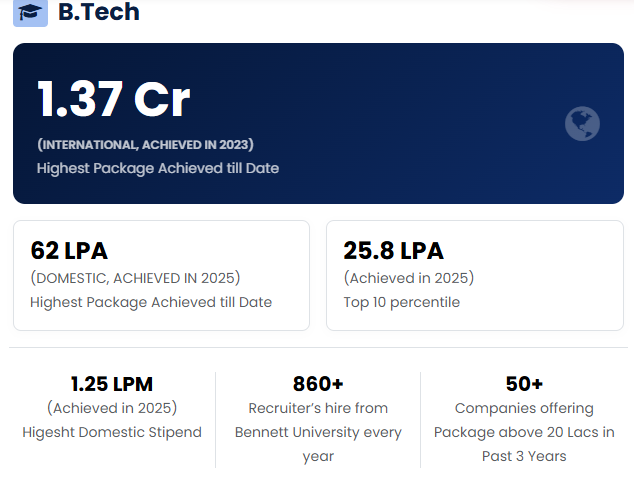
| Highest package headline | ₹1.37 crore per annum, as currently reported by the university |
| Major admission routes | Board merit, JEE, CUET, CAT, XAT, NMAT, MAT, CMAT, GMAT and university entrance tests depending on programme |
The university’s current 2027 admission information reports a 68-acre campus, 14,000+ students, 10,000 hostel capacity, 50+ programmes, 120+ international collaborations and 1,200+ companies for placements.
About Bennett University Greater Noida
Bennett University was established with an objective of developing a modern higher-education institution combining academic learning, professional skills, research and industry exposure.
The university’s association with The Times Group is an important part of its institutional identity. At the same time, prospective students should assess the university on its current academic programmes, faculty, infrastructure, placement data and recognition rather than relying solely on its parent group’s brand.
The Greater Noida location places the university within the broader Delhi-NCR education and technology ecosystem.
For students searching for Bennett University Delhi, it is useful to understand that the university is not physically situated in Delhi. Its campus is in Greater Noida, Uttar Pradesh, and is therefore part of the wider Delhi-NCR region.
The campus is designed as a residential university environment with academic blocks, laboratories, classrooms, sports facilities, hostels, student activity areas and other infrastructure.
The university’s annual-report information describes a 68-acre campus with 111 classrooms and lecture rooms and 121 teaching/research laboratories. It also states that laboratories include facilities developed with industry leaders such as NVIDIA, Dell and IBM.
Why Students Search for Bennett Noida
The search phrase Bennett Noida is frequently associated with programmes such as B.Tech, MBA, BBA, law, journalism, design and computer science.
One reason is the university’s broad programme portfolio. A student can explore several disciplines within one university rather than choosing an institution that focuses exclusively on one academic field.
The university currently promotes programmes in:
- Computer Science and Engineering
- Artificial Intelligence
- Electronics and Communication
- Electronics and Computer Engineering
- Mechanical Engineering
- Engineering Physics
- Biotechnology
- BCA
- BBA
- Integrated MBA
- MBA
- BA LLB
- BBA LLB
- LLM
- Journalism and Mass Communication
- Liberal Arts
- Psychology-related areas
- Design
- Applied sciences
- PhD programmes
The exact programme portfolio and specialisations can change from one admission cycle to another. Applicants should therefore verify the programme page applicable to their intake.
Bennett University Greater Noida Programmes
Academic Schools at Bennett University
Bennett University’s multidisciplinary model includes several major schools and academic areas.
School of Computer Science Engineering and Technology
This area focuses on software, computing, artificial intelligence, data, cybersecurity and emerging technologies.
School of Artificial Intelligence
The AI-focused programmes provide opportunities to study machine learning, artificial intelligence, data science and emerging computational applications.
School of Management
The management school offers BBA, MBA and integrated management programmes.
School of Law
Law programmes include integrated undergraduate law degrees and postgraduate legal education.
School of Media & Mass Communication
The media school prepares students for journalism, digital media, communication, broadcasting, advertising and related fields.
School of Design
Design education covers areas such as product design, fashion, communication design, animation and VFX and game design.
School of Liberal Arts
Liberal arts education provides interdisciplinary exposure across humanities, social sciences and related areas.
School of Engineering and Applied Sciences
This area includes engineering, biotechnology, physics and other applied science disciplines.
Course-Wise Entrance Examination Requirements
One of the most important questions for prospective applicants is which examination they need.
The following table provides a practical overview based on the university’s current admission information.
| Programme/Area | Typical Eligibility | Entrance/Selection Route |
|---|---|---|
| B.Tech CSE | Class 12 with required Physics & Mathematics subjects and prescribed marks | JEE/ CUET/ board merit as applicable |
| B.Tech AI | Class 12 with Physics & Mathematics and prescribed marks | Merit through specified academic/ entrance routes |
| B.Tech ECE | Class 12 with relevant science subjects | JEE/ CUET/ other notified route |
| B.Tech Electronics & Computer | Class 12 with required subjects | Applicable merit/ entrance route |
| B.Tech Mechanical | Class 12 with Physics & Mathematics | Applicable merit/ entrance route |
| B.Tech Biotechnology | Class 12 with Physics and Biology/Biotechnology/Botany/Zoology plus third subject | Merit-based selection |
| B.Tech Engineering Physics | Class 12 with prescribed science subjects | Applicable merit/entrance route |
| BCA | Class 12 with prescribed marks and English | Academic merit + interview where applicable |
| BBA | Class 12 with prescribed marks | Academic merit/ BUMAT or applicable route |
| Integrated MBA | Class 12 with minimum 60% under stated calculation | Class 12 merit |
| MBA | Graduation with minimum 50% | CAT/ XAT/ NMAT/ MAT/ CMAT/ GMAT/ BUMAT/ CUET + graduation + PI |
| BA LLB | Class 12 with prescribed eligibility | University/ national entrance route as applicable |
| BBA LLB | Class 12 with prescribed eligibility | University/ national entrance route as applicable |
| LLM | LLB with minimum 50% | CLAT/ CUET PG/ BULET + SOP + PI |
| B.Des | Class 12 with minimum 50% | UCEED/ NIFT/ NID/ BUDAT + PI + portfolio |
The university’s current admission page confirms that different programmes may use JEE, CUET, board performance and university entrance examinations such as BUDAT, BUMAT and BULAT.
Applicants should always confirm the exact criteria for their programme before paying the application fee.
Bennett University Admission Process
The general admission process can be understood in several stages.
Step 1 – Select the Programme
The first step is to identify the course, specialisation and academic school.
Step 2 – Check Eligibility
Students should confirm:
- Class 12 percentage
- Required subjects
- Graduation requirement for PG programmes
- Entrance examination
- English-language requirement
- Other programme-specific conditions
Step 3 – Complete the Online Application
The applicant enters academic and personal details and submits the required documents.
Step 4 – Submit Entrance Score
Where an entrance examination is required or considered, applicants provide the relevant score or percentile.
Step 5 – University Assessment
Depending on the programme, selection can include:
- Academic merit
- National entrance examination
- University entrance examination
- Personal interview
- Portfolio
- Statement of Purpose
Step 6 – Admission Offer
Selected candidates receive an admission offer.
Step 7 – Pay the Required Fees
The candidate confirms the seat by paying the applicable admission or tuition amount.
Step 8 – Document Verification
The university verifies academic and identity documents
Documents Required for Admission
Students should generally keep the following documents ready:
- Class 10 marksheet
- Class 12 marksheet
- Class 12 certificate
- Graduation marksheets for postgraduate admission
- Degree/provisional certificate
- Entrance examination scorecard
- Passport photographs
- Government ID
- Transfer certificate where applicable
- Migration certificate where applicable
- Category certificate where applicable
- Scholarship documents
- Portfolio for design programmes
- Statement of Purpose for applicable postgraduate programmes
Exact requirements can vary according to the programme.
Bennett University Fees 2027
Fees vary considerably according to programme and academic year.
Students should not rely on one general university fee number because B.Tech, MBA, BBA, law, design and other programmes have different fee structures.
Scholarships
Bennett University Placements
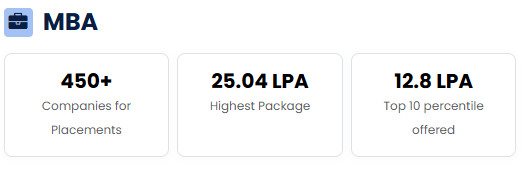
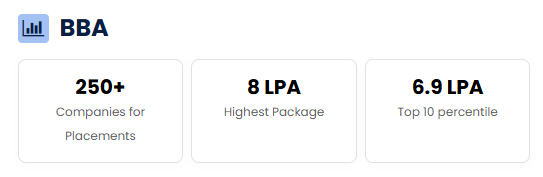
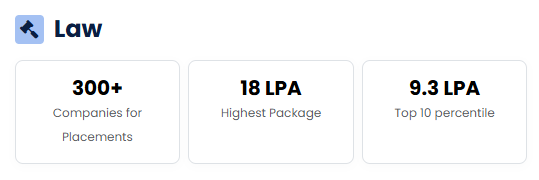
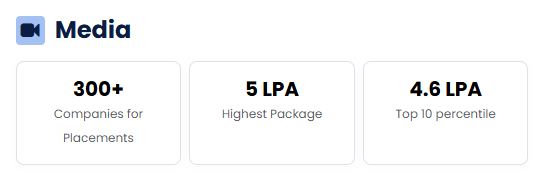
Recruitment Profiles
Different programmes lead to different recruitment markets.
Technology
Technology students can target:
- Software Engineer
- Data Engineer
- AI Engineer
- Machine Learning Engineer
- Cloud Engineer
- DevOps Engineer
- Cybersecurity Analyst
- Full Stack Developer
- Product Engineer
Management
MBA and BBA students can target:
- Business Analyst
- Management Trainee
- Marketing Executive
- Brand Manager
- Sales Manager
- Business Development Manager
- HR Executive
- Financial Analyst
- Operations Manager
- Product Manager
- Consultant
Law
Law graduates can target:
- Legal Associate
- Corporate Counsel
- Litigation Associate
- Compliance Analyst
- Legal Researcher
- Contract Specialist
- Policy Analyst
Design
Design graduates can work as:
- Product Designer
- UI/UX Designer
- Visual Designer
- Fashion Designer
- Game Designer
- Animator
- VFX Artist
- Creative Strategist
Media
Media graduates can pursue:
- Journalist
- Content Producer
- Digital Media Executive
- Copywriter
- Public Relations Executive
- Video Producer
- Social Media Manager
International University Collaborations
International exposure is a major component of Bennett University’s academic strategy.
The university currently states that it has more than 120 international collaborations. Its Global University Network includes institutions such as:
- University of British Columbia
- Monash University
- National Taiwan University
- Pennsylvania State University
- University of Birmingham
- University of Technology Sydney
- Georgia Institute of Technology
- University of Wollongong
- University of York
- University of Florida
- Tel Aviv University
- University of Waikato
- Hebrew University of Jerusalem
- University of Strathclyde
- UCSI University
- Western Sydney University
- Iowa State University
- Royal Holloway University of London
- University of Dundee
- University of Essex
- University of Bordeaux
- Babson College
The university’s International Affairs page describes exchange programmes, semester-abroad opportunities, summer schools, research experiences and certificate programmes.
Global Pathways Programmes
One of Bennett University’s distinctive international options is its Global Pathways structure.
The current programme includes pathways such as:
B.Tech Global
Students can spend the initial years at Bennett and continue at an overseas partner university.
Current listed partners include:
- Iowa State University, USA
- University of Essex, UK
BBA Global
The university also offers a BBA Global pathway involving the University of Essex.
The Global Pathways page describes the programmes as a way to begin education in India and complete part of the degree at an international partner university.
International Transfer Programmes
The university also describes International Transfer pathways.
These programmes allow students to complete part of their academic journey at Bennett and transfer to an overseas partner institution.
The current international information lists partner institutions including:
- Iowa State University
- Rowan University
- University of Essex
- University of Birmingham
- Monash University
- University of Wollongong
Students should check the exact academic, financial, credit-transfer and visa requirements before selecting such a pathway.
Semester Abroad
A Semester Abroad programme can allow eligible students to spend a semester or longer at an international partner university.
The current international office identifies destinations and institutions including:
- University of Birmingham
- Georgia Tech
- National Taiwan University
- University of California, Berkeley
- University of Wollongong
The university’s international office provides support involving documentation, visas, insurance, language preparation and mentoring.
International Accelerated Master’s Programmes
Bennett also promotes International Accelerated Master’s pathways.
The model can combine undergraduate study at Bennett with postgraduate study at an international partner.
Current examples include partner institutions such as:
- University of Florida
- University of Nebraska at Omaha
- University of Missouri–Kansas City
The programme structure can reduce the time required compared with completing two entirely separate degrees, subject to the partner university’s admission requirements and pathway conditions.
Research Collaborations
Research is another major component of the university.
Bennett’s research portal identifies academic and industry collaborations involving organisations such as:
- Georgia Tech Research Corporation
- Babson Global
- University of Nebraska Omaha
- Cornell University Law School
- Samuel Curtis Johnson Graduate School of Management
- University of Florida
- Florida International University
- University of Missouri–Kansas City
- University of British Columbia
- NVIDIA
- Amazon Web Services
- IBM
- Infosys
- NASSCOM
- Salesforce
- Grant Thornton
The university describes research as a core part of its academic ecosystem and promotes interdisciplinary research and innovation.
Industry Collaboration and Technology Ecosystem
The university’s industry relationships are particularly visible in technology.
Examples include collaborations with:
- NVIDIA
- IBM
- Dell
- AWS
- Microsoft
- Oracle
- Infosys
- L&T EduTech
- KPMG
- HCL
- Palo Alto Networks-related initiatives
The university’s annual report identifies 121 teaching/research laboratories and notes specialised laboratories associated with NVIDIA, Dell and IBM.
This type of infrastructure can be valuable for students who want hands-on exposure rather than classroom-only education.
Bennett University Campus
The Greater Noida campus covers approximately 68 acres.
The university describes the campus as a futuristic residential campus with academic, residential, sports and student-life facilities.
Current university information reports:
- 68-acre campus
- 14,000+ students
- 10,000 hostel capacity
- 16+ sports facilities
- 40+ student-led clubs and societies
- 50+ UG/PG/doctoral programmes
- 120+ international collaborations
- 1,200+ placement companies
The campus therefore operates as a comprehensive residential education environment rather than a conventional day college.
Classrooms and Academic Infrastructure
The annual report provides more detailed infrastructure information.
It identifies:
- 111 classrooms and lecture rooms
- 121 teaching/research laboratories
- ICT-enabled classrooms
- Projector and audio-video systems
- Wi-Fi/LAN connectivity
- Learning Management System
- Specialised research laboratories
This infrastructure supports technology-oriented, management, science and engineering education.
Library
A university library plays a major role in undergraduate and postgraduate learning.
Students need access to:
- Textbooks
- Research papers
- Academic journals
- Online databases
- E-books
- Legal databases
- Business research material
- Technical literature
The availability of digital resources becomes particularly important for postgraduate students and researchers.
Laboratories
Laboratories are one of the key infrastructure components for engineering and applied sciences.
Students can access discipline-specific laboratories covering areas such as:
- Artificial Intelligence
- Computer Science
- Electronics
- Communication
- Mechanical Engineering
- Biotechnology
- Physics
- Nanotechnology
- Semiconductor-related research
- Robotics
The Physics programme page, for example, identifies specialised laboratories involving computational physics, nanotechnology, advanced optics, materials and other research facilities.
Hostel Facilities
The university reports hostel capacity of around 10,000.
Residential facilities are intended to support students from different parts of India and overseas.
Depending on the residence arrangement, facilities can include:
- Furnished accommodation
- Wi-Fi
- Mess
- Common areas
- Security
- Recreation
- Laundry
- Study spaces
- Student support
Hostel fees vary according to room type, occupancy and academic year, so applicants should confirm the current fee schedule before admission.
Sports Facilities
The university reports more than 16 sports facilities.
Sports and fitness activities can include:
- Cricket
- Football
- Basketball
- Volleyball
- Badminton
- Table tennis
- Athletics
- Gym and fitness
- Indoor sports
Sports can contribute to student wellbeing while also providing opportunities for teamwork and leadership.
Clubs and Student Activities
Bennett reports more than 40 student-led clubs and societies.
Students can participate in activities related to:
- Entrepreneurship
- Technology
- Coding
- Finance
- Marketing
- Law
- Media
- Music
- Dance
- Theatre
- Photography
- Sports
- Literature
- Debate
- Social service
Such activities can be valuable for students because recruiters frequently assess communication, leadership, teamwork and problem-solving alongside technical qualifications.
Entrepreneurship and Startups
Entrepreneurship is another area promoted by the university.
Current university information reports more than 70 startups launched and ₹125 crore+ funds raised by startups associated with the university ecosystem.
Students interested in entrepreneurship can potentially benefit from:
- Startup events
- Mentoring
- Innovation challenges
- Incubation
- Industry networking
- Research
- Business-plan development
- Founder interactions
The startup ecosystem can be particularly relevant to BBA, MBA, computer science, AI, design and engineering students.
Rankings and Recognition
Ranking information needs to be presented carefully.
The National Institutional Ranking Framework (NIRF) published by India’s Ministry of Education is one of the most useful government-backed ranking references.
The NIRF 2025 University ranking page lists institutions with individual ranks, while separate rank-band pages list institutions in broader ranges. Bennett University should not be assigned a specific NIRF rank unless that exact rank appears in the applicable NIRF table.
Some private education websites may use phrases such as “top university,” “best university” or “top-ranked university” based on private rankings or promotional lists. Such statements should be attributed to the relevant ranking organisation rather than presented as objective facts.
For a student researching BU Noida, the better approach is to consider:
- UGC recognition
- AIU membership where applicable
- Professional regulatory recognition
- NIRF data
- Programme accreditation where applicable
- Research output
- Faculty
- Placement outcomes
- International partnerships
The university’s current brochure identifies recognition/approval affiliations including UGC, AIU, Bar Council of India and the Association of Commonwealth Universities.
Placement Data Transparency
Placement statistics should always be associated with a year and programme.
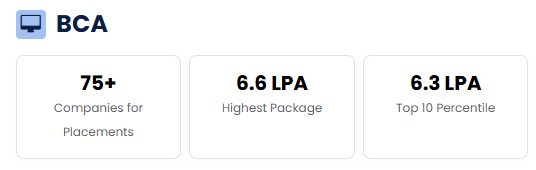
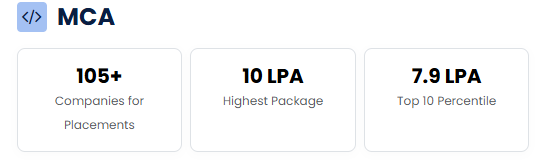
Bennett’s website currently publishes an institution-wide highest package of ₹1.37 crore per annum and more than 1,200 placement companies.
The management school separately reports ₹42 lakh highest package and ₹7.5 lakh average package, with 107 participating organisations.
These numbers should not be merged into one figure.
For example:
Likewise, the ₹42 lakh MBA highest package should not be described as the university-wide highest package.
This distinction makes an education page more reliable and useful.
Student Admission Checklist
Before accepting admission at Bennett University Noida, students should verify:
- Programme duration
- Eligibility
- Entrance examination
- Application deadline
- Tuition fee
- Hostel fee
- Scholarship
- Refund policy
- Curriculum
- Specialisation
- Internship
- Placement eligibility
- Average salary
- Median salary
- Highest package
- Recruiters
- International options
- Campus facilities
- Accreditation/recognition
- Total cost of attendance
Frequently Asked Questions About Bennett University Greater Noida
Yes. The university has 120+ international collaborations and offers semester-abroad, global pathway, transfer and other international opportunities.
The current university information describes a 68-acre campus.
Popular areas include B.Tech Computer Science, Artificial Intelligence, BBA, MBA, Integrated MBA, law, BCA, design and media programmes. The university also offers engineering and applied science options.
The examination depends on the course. Current admission information includes JEE, CUET, CAT, XAT, NMAT, MAT, CMAT, GMAT and university tests such as BUMAT, BUDAT and BULAT for relevant programmes.
Yes. CAT is among the management entrance examinations listed by Bennett University for MBA selection.
For engineering aspirants, the university offers several emerging technology areas.
Students can choose between traditional and newer fields:
Traditional/Established
Mechanical Engineering
Electronics and Communication
Biotechnology
Technology-oriented
Computer Science
Artificial Intelligence
Electronics and Computer Engineering
Research-oriented
Engineering Physics
Advanced science areas
The availability of AI, robotics, semiconductor-related learning and technology laboratories can be useful for students who want exposure to emerging sectors.
Management students can access BBA, Integrated MBA and MBA pathways.
The key features include:
Business education
Analytics
Finance
Marketing
Product management
Entrepreneurship
Industry exposure
International opportunities
The MBA accepts multiple national management examinations rather than restricting applicants to CAT alone.
This can be useful for candidates who have appeared for MAT, CMAT, NMAT, XAT or GMAT.
International education can provide students with exposure to:
Different teaching methods
International academic standards
Cross-cultural communication
Global businesses
Overseas research
International networks
Bennett’s current international network includes more than 120 collaborations and includes universities in the USA, UK, Canada, Australia, Europe and Asia.
The university also has pathways allowing students to spend part of their degree overseas.
This can be particularly useful for students who eventually want to pursue postgraduate education abroad.


