Exam BCECE
BCECE 2026: A Comprehensive Description of the Bihar Combined Entrance Competitive Examination
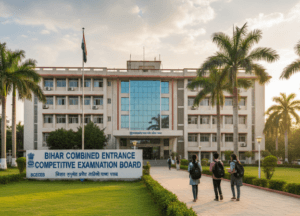
The BCECE 2026, or Bihar Combined Entrance Competitive Examination 2026, stands as one of the most important state-level entrance examinations in India, administered by the Bihar Combined Entrance Competitive Examination Board (BCECEB). Established under the Bihar Combined Entrance Competitive Examination Act, 1995, the BCECEB is an autonomous body under the Government of Bihar responsible for organizing fair, transparent, and merit-based admissions to various professional undergraduate courses across government and private institutions in the state.
Full form: Bihar Combined Entrance Competitive Examination.
Historically, BCECE was introduced in the mid-1990s to streamline admissions to engineering, medical, pharmacy, agriculture, and allied professional courses in Bihar, replacing fragmented departmental or university-level tests. Over the decades, it has evolved significantly. Until around 2018–2019, BCECE served as the primary exam for both medical (MBBS/BDS) and engineering seats in Bihar. However, following the National Testing Agency’s (NTA) introduction of NEET UG as the sole national medical entrance and JEE Main‘s growing role in engineering, BCECE underwent major restructuring. Since 2019, NEET UG has been mandatory for MBBS/BDS admissions in Bihar (state quota included), while engineering admissions increasingly rely on JEE Main scores for many seats. BCECE now primarily caters to:
- B.Tech / B.E. (in some state engineering colleges under state quota or lateral entry via BCECE LE)
- B.Pharm (Bachelor of Pharmacy)
- B.Sc. Agriculture, Horticulture, Forestry, Fisheries, etc.
- Other paramedical and allied courses (sometimes grouped under DCECE for diploma-level, but BCECE for degree-level)
This shift has made BCECE a more specialized exam focused on non-NEET streams, particularly agriculture, pharmacy, and certain engineering seats in Bihar-affiliated colleges.
Expected Key Timeline for BCECE 2026
- Official Notification & Information Brochure Release: March–April 2026 (likely first or second week of April on bceceboard.bihar.gov.in).
- Online Application/Registration Start: March–April 2026 (immediately after notification).
- Last Date for Application (without late fee): April–May 2026 (4–6 weeks window).
- Late Fee Application Window: Possible extension with additional fee (₹500–1,000 extra).
- Application Form Correction/Edit Window: May 2026 (short 2–3 day period).
- Admit Card / Hall Ticket Download: Late May or early June 2026.
- BCECE 2026 Exam Date: First to mid-June 2026 (tentative; offline OMR-based, possibly one or two days depending on groups).
- Provisional Answer Key Release & Objection Window: Mid-June 2026.
- Final Answer Key: Late June 2026.
- Result Declaration & Rank Card: Late June or early July 2026.
- Counselling Registration & Choice Filling: July 2026.
- Seat Allotment Rounds (including mop-up): July–August 2026.
- Classes Commencement: August–September 2026 for academic session 2026-27.
These dates are predictive, based on BCECE 2025 patterns (notification around April–May 2025, exam June 2025) and expert analyses. The board publishes the exact schedule in the official notification PDF.
Official Resources & How to Stay Updated
- Primary Website: https://bceceboard.bihar.gov.in/ (Notice Board section for all updates).
- Admissions/Counselling Portal: https://bcece.admissions.nic.in/ (for registration, choice filling, seat allotment when active).
- Notice Board: Regularly check for “BCECE-2026” related advt. numbers.
- Helpline: BCECEB provides contact numbers/email in the brochure (typically 0612-2223538 or similar; check site).
Eligibility Criteria (Expected for 2026 – Based on Recent Years)
- Nationality & Domicile: Indian citizen; Bihar domicile certificate required for most state quota seats (some open seats available).
- Age Limit: Minimum 17 years as on December 31, 2026 (for agriculture/pharmacy); no upper limit for most groups.
- Educational Qualification:
- Passed or appearing in Class 12 (10+2) from a recognized board (Bihar Board, CBSE, ICSE, etc.).
- For PCM Group (Engineering/Pharmacy): Physics, Chemistry, Mathematics mandatory; minimum 45% aggregate (40% for SC/ST/OBC/EWS).
- For PCB Group (Agriculture/Paramedical): Physics, Chemistry, Biology (or Mathematics for some); similar percentage.
- For Agriculture (CBA/MBA/PCA): Specific subjects like Biology/Agriculture Science.
- Final-year 12th students eligible (provisional admission subject to passing qualifying exam).
Exam Pattern & Structure
BCECE is an offline, pen-and-paper (OMR-based) exam with multiple groups:
- Groups: PCM (Physics + Chemistry + Mathematics), PCB (Physics + Chemistry + Biology), PCA (Physics + Chemistry + Agriculture), etc.
- Subjects per Group: 3 papers (one per subject).
- Questions per Subject: 100 MCQs.
- Total Questions/Marks: 300 questions / 1200 marks (for full PCM/PCB group).
- Marking Scheme: +4 for correct answer, -1 for incorrect (negative marking), 0 for unanswered.
- Duration: Typically 3 hours per subject paper (often conducted in morning/afternoon shifts on one or two days).
- Medium: English + Hindi.
- Difficulty Level: Moderate to tough; aligned with Class 11–12 NCERT/Bihar Board syllabus.
Detailed Syllabus (Class 11 & 12 Level)
The syllabus follows NCERT textbooks (Physics, Chemistry, Mathematics/Biology/Agriculture Science).
- Physics: Mechanics (laws of motion, work/energy/power, rotational motion), Gravitation, Properties of Matter, Thermodynamics, Waves & Sound, Optics, Electrostatics, Current Electricity, Magnetism, Electromagnetic Induction, Modern Physics (atoms, nuclei, semiconductors).
- Chemistry: Physical (states of matter, thermodynamics, equilibrium, kinetics, solutions, electrochemistry), Inorganic (periodic table, coordination compounds, p-block, d-block), Organic (hydrocarbons, functional groups, biomolecules, polymers).
- Mathematics: Sets & Relations, Trigonometry, Algebra (complex numbers, quadratic equations, sequences), Coordinate Geometry, Calculus (limits, differentiation, integration, differential equations), Vectors & 3D Geometry, Probability & Statistics.
- Biology (for PCB/PCA): Diversity in Living World, Structural Organization in Plants/Animals, Cell Structure & Function, Plant/Human Physiology, Reproduction, Genetics & Evolution, Biotechnology, Ecology & Environment.
- Agriculture (for PCA group): Agro-meteorology, Crop Production, Horticulture, Animal Husbandry, Soil Science, Agricultural Economics.
High-weightage topics include Mechanics & Electrostatics (Physics), Organic Reactions (Chemistry), Calculus & Algebra (Maths), Genetics & Ecology (Biology).
Application Process & Fee (Tentative)
- Fee: General/BC ≈ ₹1,000–1,500 (depending on group); SC/ST/PwD ≈ ₹500–1,000.
- Payment: Online (net banking/card/UPI) or offline challan.
- Steps (when portal opens):
- Visit bceceboard.bihar.gov.in or bcece.admissions.nic.in.
- Register with mobile/email (OTP verification).
- Fill personal/academic details, choose group/subjects.
- Upload photo, signature, domicile/caste certificate if applicable.
- Pay fee.
- Submit & download confirmation page.
Preparation Tips & Resources
- Books: NCERT Class 11–12 (core), Pradeep’s Objective Physics/Chemistry, R.D. Sharma (Maths), Trueman’s Biology, Arihant/Previous Year Solved Papers.
- Strategy: Focus on NCERT line-by-line, solve 10–15 previous years’ papers, practice time-bound mocks.
- Coaching/Online: Local Bihar coaching (e.g., in Patna), YouTube channels for topic-wise lectures.
- Mock Tests: Available on official site post-notification; use apps like Testbook/Gradeup.
Post-Exam Process
- Counselling: Online via bcece.admissions.nic.in (choice filling, document verification, multiple rounds including mop-up for vacant seats).
- Seats: Thousands across government engineering colleges (e.g., MIT Muzaffarpur, GEC Vaishali), pharmacy colleges, agriculture universities (Bihar Agricultural University), etc.
- Reservation: As per Bihar govt norms (SC 16%, ST 1%, EBC 18%, BC 12%, EWS 10%, etc.).
Significance & Challenges
BCECE 2026 remains crucial for Bihar students seeking affordable professional education in-state. It offers good ROI with lower fees in government colleges and strong placement opportunities in core sectors. Challenges include competition (lakhs of applicants), negative marking pressure, and occasional delays in counselling.
In summary, BCECE 2026 is poised to be a key milestone for thousands of Bihar aspirants. Bookmark bceceboard.bihar.gov.in and check the Notice Board from March 2026 onward. Once the notification drops, act quickly on registration. If you’re targeting a specific group (PCM for engineering, PCB for agriculture), prepare NCERT rigorously—success is achievable with consistent effort.